Pakistan Geography: A Comprehensive Overview
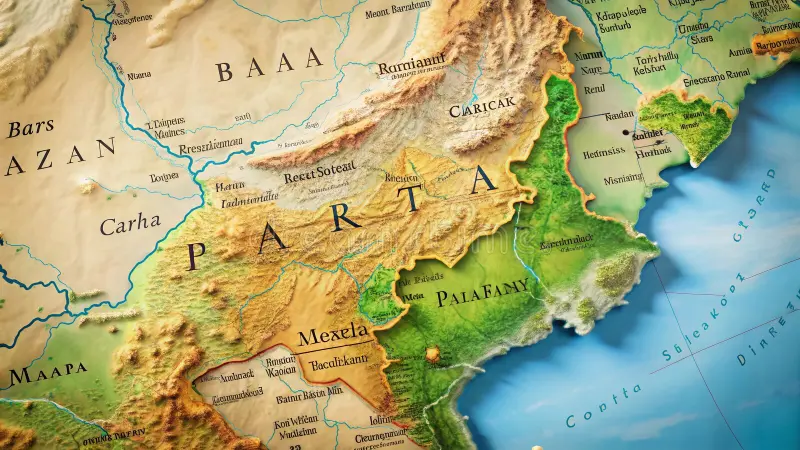
Pakistan, officially the Islamic Republic of Pakistan, is a country of remarkable geographic diversity. Situated at the crossroads of South Asia, Central Asia, and the Middle East, its landscape spans towering mountain peaks, vast river plains, arid deserts, and a coastal shoreline. Understanding Pakistan geography is essential to appreciating the country’s climate, culture, and economic life.
Location and Borders
Pakistan is located in South Asia, lying between latitudes 24°N and 37°N and longitudes 61°E and 75°E. It covers an area of approximately 881,913 square kilometers, making it the 33rd largest country in the world. Pakistan shares borders with India to the east, Afghanistan to the northwest, Iran to the west, and China to the northeast. To the south, it has a coastline along the Arabian Sea stretching roughly 1,046 kilometers.
Major Mountain Ranges
One of the most striking features of Pakistan geography is its extraordinary mountain terrain in the north and northwest. Pakistan is home to some of the highest peaks on Earth. The Karakoram Range, located in Gilgit-Baltistan, contains K2 — the second highest mountain in the world at 8,611 meters. The Himalayas stretch across the northeastern part of the country, while the Hindu Kush range dominates the northwest. These ranges are not only visually dramatic but also serve as natural borders and vital sources of glacial meltwater for the river systems below.
River Systems and Plains
The Indus River is the lifeline of Pakistan. Rising in Tibet and flowing southward through the entire length of the country before emptying into the Arabian Sea near Karachi, the Indus and its five major tributaries — the Jhelum, Chenab, Ravi, Beas, and Sutlej — form the fertile Punjab and Sindh plains. These river plains are the agricultural heartland of Pakistan, supporting the majority of the population and producing wheat, cotton, rice, and sugarcane on a massive scale. The Indus Valley is also the cradle of one of the world’s earliest civilizations, the Indus Valley Civilization.
Deserts and Plateaus
Pakistan geography includes significant arid zones. The Thar Desert extends across eastern Sindh and southern Punjab, merging with the Indian Thar Desert. It is one of the most densely populated deserts in the world. In the southwest lies the Balochistan Plateau, a vast, rugged, and largely barren region covering nearly half of Pakistan’s total land area. Despite its sparse population, Balochistan is rich in mineral resources including coal, natural gas, and copper.
Climate Zones
Due to its diverse topography, Pakistan experiences a wide range of climates. The northern mountain regions have a cold alpine climate with heavy snowfall in winter. The plains of Punjab and Sindh experience an extreme continental climate with hot summers often exceeding 45°C and cool winters. The coastal areas around Karachi enjoy a more moderate climate due to the Arabian Sea. Pakistan also lies in the monsoon belt; the summer monsoon brings rainfall to the eastern parts of the country between July and September, while the western regions depend on winter rains from the Mediterranean weather system.
Coastal Areas
The southern coastline along the Arabian Sea includes two main regions: the Makran Coast in Balochistan and the Sindh coast near Karachi. The port city of Karachi, Pakistan’s largest city and economic hub, is strategically located on this coast. The deep-sea port of Gwadar, developed in recent decades under the China-Pakistan Economic Corridor (CPEC), has emerged as a major new gateway for regional trade and commerce.
Natural Resources and Environmental Significance
Pakistan’s geographic diversity translates directly into rich natural resources. The northern glaciers represent the largest reservoir of freshwater outside the polar regions. Fertile alluvial plains support agriculture, while the mineral-rich Balochistan Plateau holds significant economic potential. However, Pakistan geography also presents challenges: flooding in river plains, earthquakes in the north, and desertification in arid zones are ongoing environmental concerns that demand careful management.
Conclusion
Pakistan geography is one of extraordinary contrast and complexity — from the world’s highest peaks to scorching deserts, from fertile river valleys to a strategic Arabian Sea coastline. This geographic diversity has shaped the country’s history, economy, and cultural identity, and continues to play a central role in its future development.