History of the Ottoman Empire: Rise, Power, and Fall
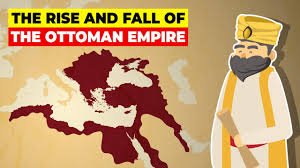
Few empires in world history match the scale, staying power, and lasting impact of the Ottoman Empire. For over six centuries, it shaped the politics, culture, and religion of three continents. Understanding its history means understanding the roots of much of today’s modern world.
The Origins: How It All Began
The Ottoman Empire was named for Osman I, a Turkish Muslim prince in Bithynia who conquered neighboring regions once held by the Seljuq dynasty and founded his own ruling line around 1299. At that point, his kingdom was small — little more than a tribal territory in northwestern Anatolia. Britannica
However, what set the Ottomans apart was their discipline and strategy. Their early success came from military discipline, a land-grant system known as the timar system, and clever alliances with Byzantine factions against rival Turkic states. Step by step, therefore, they grew from a minor principality into a serious regional power. CompleteEra
By the 14th century, they had seized key cities like Bursa in 1326 and Edirne in 1361, establishing a capital in Anatolia’s heartland. Each conquest brought more resources, more soldiers, and more confidence. CompleteEra
The Ottoman Empire Enters Europe
One of the most dramatic turning points in Ottoman history came when the empire crossed into Europe. Ottoman troops first invaded Europe in 1345, sweeping through the Balkans. This expansion alarmed European powers, yet none could stop the Ottoman advance for long. Britannica
Then came the moment that changed history forever. For over a thousand years, Constantinople had served as the capital of the Eastern Roman Empire, standing as one of the world’s grandest cities. Its fierce guards and strong defenses had long made it seem unconquerable. Nevertheless, in 1453, Sultan Mehmed II set his sights on the city. By the time he launched his siege, civil war and famine had already weakened the Byzantine Empire, and a devastating plague had cut deep into its population. NoiserNoiser
After just over a month of relentless cannon fire, the city fell. When Constantinople fell on 29 May 1453, it sent shockwaves throughout Europe. Mehmed quickly proclaimed it the new imperial capital of the Ottoman Empire. As a result, the Ottomans had transformed from a regional force into a true world power. Noiser
The Golden Age: Suleiman the Magnificent
The 16th century marked the empire’s greatest period of power and reach. The Ottoman Empire reached its peak in territory and power during the reign of Suleiman the Magnificent, from 1520 to 1566. During this time, he proclaimed himself Caliph and protector of the Muslim world and expanded the empire to its greatest extent, covering parts of Europe, Asia, and Africa. Noiser
Suleiman took control of parts of Persia, most of Arabia, and large sections of Hungary and the Balkans. By the early 16th century, the Ottomans had also defeated the Mamluk dynasty in Syria and Egypt, and their navy under Barbarossa seized control of much of the North African coast. Britannica
The empire’s success lay in its centralized structure as much as its territory. Control of some of the world’s most profitable trade routes brought vast wealth, while its well-organized military system delivered consistent military strength. In other words, the Ottomans built a machine that was as efficient as it was powerful. National Geographic
Culture, Religion, and Governance
Beyond military conquest, the Ottoman Empire was also a place of rich cultural life. It brought together Turkish, Persian, Arab, Greek, and Balkan traditions under one roof. Art, poetry, architecture, and science all flourished, especially in Constantinople.
Unlike other Turkic states, the Ottomans embraced Sunni Islam while also absorbing Persian and Arab cultural influences, creating a unique blend that defined Ottoman identity for centuries. Moreover, the empire governed a vast mix of religions and ethnic groups with a degree of tolerance that was rare for its time. CompleteEra
Religiously, the sultan held enormous authority. Beginning with Selim I, the Ottoman sultans also held the title of caliph, making them the spiritual head of Islam — a title that gave them influence far beyond their military borders. Britannica
The Long Decline
Even at its height, however, the seeds of decline were already growing. Five key factors explain the decline and fall of the Ottoman Empire: the weakening of its government and relative economic decline; the spread of nationalism in the Balkans; the attempts at revival by the Young Turks; German attempts to build influence in the Middle East; and the impact of the Balkan Wars. Powerandpast
After the Ottoman forces failed in their final effort to take Vienna in 1683, subsequent losses led them to give up Hungary in 1699. Corruption and poor leadership gradually damaged the government further. Meanwhile, European powers were growing stronger and more modern by the decade. Britannica
The conservatism of the privileged ruling class in Constantinople, corrupt military leaders, and economic decline resulted in a broken state, particularly when compared with the rising industrial strength of the West. Consequently, by the 19th century, other nations had begun calling the once-mighty empire “the sick man of Europe.” Powerandpast
Reform Attempts and the Young Turks
Faced with collapse, Ottoman leaders tried hard to modernize. The Ottomans launched major reforms in the 19th century, first under Mahmud II, who abolished the Janissaries in 1826 and rebuilt the army along modern lines. Despite these efforts, however, reform came too slowly to reverse the empire’s overall decline. CompleteEra
Nationalist movements, meanwhile, pulled the empire apart from within. Most of its remaining European territory was lost in the Balkan Wars of 1912 and 1913, a devastating blow that stripped the empire of lands it had held for generations. Britannica
World War I and the Final Collapse
The final chapter of the Ottoman Empire played out on the battlefields of World War I. The Ottoman Empire sided with Germany in World War I from 1914 to 1918. After the war ended, treaties dissolved the empire, and in 1922 the sultanate was abolished by Mustafa Kemal Atatürk, who proclaimed the Republic of Turkey the following year. Britannica
Thus, after more than six hundred years of continuous rule, one of history’s greatest empires came to an end. In its place rose the modern nation of Turkey, along with dozens of other states whose borders trace directly back to Ottoman rule.
The Legacy of the Ottoman Empire
The Ottoman Empire did not simply disappear — it left deep marks that the world still lives with today. The borders, conflicts, and political identities of over twenty modern nations trace their origins directly to the empire’s rise, governance, and fall. Powerandpast
Six centuries after the Ottoman Empire first emerged on the battlefields of Anatolia, it fell apart in the chaos of World War I. Yet its influence lives on in the languages, laws, architecture, food, and faith of millions of people across the Middle East, North Africa, and southeastern Europe. National Geographic
Why the Ottoman Empire Still Matters
Studying the Ottoman Empire is not merely about the past. Rather, it helps us understand why borders are drawn the way they are today, why certain conflicts persist, and how religion and political power have shaped entire regions. It also shows, clearly and powerfully, how even the mightiest empires are not permanent — and how the decisions of rulers, for better or worse, echo through the centuries long after they are gone.