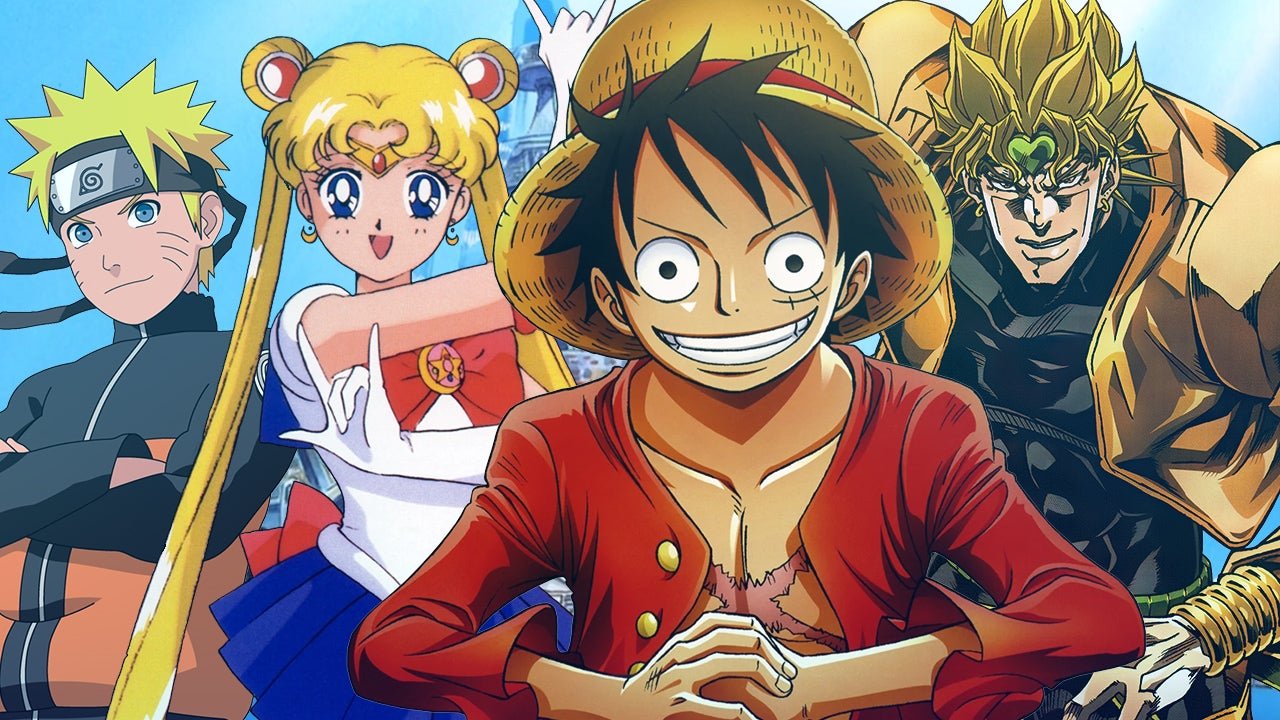
Anime: A World Beyond Animation

Introduction Few art forms have captured the global imagination quite like anime. What began as a modest Japanese experiment in animated storytelling has grown into one of the most powerful and far-reaching cultural forces of the modern era. From the quiet fishing villages of Studio Ghibli films to the explosive battle arenas of Dragon Ball Z, anime encompasses an astonishing range of human experience — and continues to win the hearts of millions around the world every year. A Brief History of Anime Anime traces its roots to the early 20th century, when Japanese artists first began experimenting with Western animation techniques. The oldest surviving Japanese animation dates back to 1917, but it was the work of Osamu Tezuka in the 1960s that truly defined the medium. Often called the "God of Manga," Tezuka created Astro Boy in 1963 — widely regarded as the first modern anime series. His distinctive large-eyed character style became the visual language that generations of artists would inherit and evolve. Through the 1970s and 1980s, anime expanded rapidly. Franchises like Mobile Suit Gundam introduced complex political narratives to science fiction, while Dragon Ball and Sailor Moon captured young audiences worldwide. By the 1990s, the release of Neon Genesis Evangelion shocked the industry with its psychological depth, and Ghost in the Shell crossed over into mainstream Western cinema. Anime was no longer just children's entertainment — it had become serious art. What Makes Anime Unique Anime stands apart from Western animation in several fundamental ways. First, it is not limited by genre or audience age. A single streaming platform might host a heartwarming story about a bakery, a brutal medieval fantasy, a psychological thriller, and a slice-of-life romance — all under the banner of anime. This versatility is one of its greatest strengths. Second, anime embraces emotional complexity. Characters in anime are rarely purely heroic or purely villainous. They grieve, doubt themselves, make catastrophic mistakes, and grow. Viewers often form deep emotional bonds with characters over long-running series, experiencing something closer to reading a novel than watching a conventional cartoon. Third, the visual style itself is distinctive. The iconic large, expressive eyes — a legacy of Tezuka's design philosophy — allow for enormous emotional nuance. Animators use colour, lighting, and motion with theatrical intention, turning even still frames into works of art worthy of a gallery wall. Iconic Studios and Their Legacies No discussion of anime is complete without acknowledging the studios that shaped it. Studio Ghibli, co-founded by Hayao Miyazaki and Isao Takahata, is perhaps the most beloved animation studio in the world. Films like Spirited Away, My Neighbor Totoro, and Princess Mononoke are masterclasses in world-building and emotional storytelling. Spirited Away won the Academy Award for Best Animated Feature in 2003, cementing Ghibli's international prestige. Madhouse, Bones, and Ufotable have each produced landmark television series. Ufotable in particular raised the bar for visual quality with their work on Demon Slayer: Kimetsu no Yaiba, whose animation became a cultural talking point in 2019 and beyond. MAPPA, a newer studio, has taken on some of the most ambitious projects in recent years, including Attack on Titan: The Final Season and Jujutsu Kaisen — both global phenomena that introduced millions of new fans to the medium. The Global Explosion of Anime For decades, anime was a niche interest outside Japan, enjoyed by dedicated fans who traded VHS tapes or downloaded subtitled files from the early internet. That world has been transformed utterly by streaming. Netflix, Crunchyroll, and Funimation have made anime globally accessible overnight. Netflix alone has invested hundreds of millions of dollars into anime production, commissioning original series and securing exclusive streaming rights to major titles. The result has been a tidal wave of new international fans. The numbers are staggering. Demon Slayer: Mugen Train became the highest-grossing film in Japanese history in 2020, overtaking Spirited Away after nearly two decades. Attack on Titan regularly trends on social media during new episode releases. One Piece, now over a thousand episodes long, gained an enormous new audience following Netflix's live-action adaptation in 2023. Anime's influence has also seeped into fashion, music, gaming, and fine art. Artists like Kanye West and Pharrell Williams have cited anime as creative influences. Streetwear brands collaborate with anime franchises. University courses on anime theory and Japanese popular culture are now commonplace in Western academia. Anime for Every Viewer One of anime's most remarkable qualities is its accessibility across audiences. For younger viewers, series like Pokémon, My Hero Academia, and Sword Art Online offer adventure, friendship, and excitement. For adults seeking thoughtful drama, Vinland Saga explores war and moral philosophy with Shakespearean ambition. Violet Evergarden is a meditation on grief and human connection that rivals any literary novel. There is comedy (Kaguya-sama: Love is War), horror (Parasyte), cooking (Food Wars), sport (Haikyuu!!), and everything in between. The sheer breadth of what anime can be means that the question is never "is there an anime for me?" — only "which one should I start with?" The Future of Anime The anime industry is growing faster than at any point in its history. Japan's Animation Association has reported record revenues year after year, driven by international streaming demand. New technologies, including AI-assisted animation tools, are beginning to reduce production costs, potentially allowing more independent creators to bring their visions to screen. Yet the soul of anime remains unchanged: a commitment to storytelling that is unafraid of darkness, unafraid of beauty, and utterly unafraid of feeling. Whether through the quiet magic of a Ghibli forest or the thunderous clash of titans, anime continues to remind its audience of the most essential human truth — that a good story, told with care and courage, can cross any border. Anime is not just a genre. It is a window into imagination itself.
Introduction

Few art forms have captured the global imagination quite like anime. What began as a modest Japanese experiment in animated storytelling has grown into one of the most powerful and far-reaching cultural forces of the modern era. From the quiet fishing villages of Studio Ghibli films to the explosive battle arenas of Dragon Ball Z, anime encompasses an astonishing range of human experience — and continues to win the hearts of millions around the world every year.


A Brief History of Anime

Anime traces its roots to the early 20th century, when Japanese artists first began experimenting with Western animation techniques. The oldest surviving Japanese animation dates back to 1917, but it was the work of Osamu Tezuka in the 1960s that truly defined the medium. Often called the “God of Manga,” Tezuka created Astro Boy in 1963 — widely regarded as the first modern anime series. His distinctive large-eyed character style became the visual language that generations of artists would inherit and evolve.

Through the 1970s and 1980s, anime expanded rapidly. Franchises like Mobile Suit Gundam introduced complex political narratives to science fiction, while Dragon Ball and Sailor Moon captured young audiences worldwide. By the 1990s, the release of Neon Genesis Evangelion shocked the industry with its psychological depth, and Ghost in the Shell crossed over into mainstream Western cinema. Anime was no longer just children’s entertainment — it had become serious art.


What Makes Anime Unique

Anime stands apart from Western animation in several fundamental ways. First, it is not limited by genre or audience age. A single streaming platform might host a heartwarming story about a bakery, a brutal medieval fantasy, a psychological thriller, and a slice-of-life romance — all under the banner of anime. This versatility is one of its greatest strengths.

Second, anime embraces emotional complexity. Characters in anime are rarely purely heroic or purely villainous. They grieve, doubt themselves, make catastrophic mistakes, and grow. Viewers often form deep emotional bonds with characters over long-running series, experiencing something closer to reading a novel than watching a conventional cartoon.

Third, the visual style itself is distinctive. The iconic large, expressive eyes — a legacy of Tezuka’s design philosophy — allow for enormous emotional nuance. Animators use colour, lighting, and motion with theatrical intention, turning even still frames into works of art worthy of a gallery wall.


Iconic Studios and Their Legacies

No discussion of anime is complete without acknowledging the studios that shaped it.

Studio Ghibli, co-founded by Hayao Miyazaki and Isao Takahata, is perhaps the most beloved animation studio in the world. Films like Spirited Away, My Neighbor Totoro, and Princess Mononoke are masterclasses in world-building and emotional storytelling. Spirited Away won the Academy Award for Best Animated Feature in 2003, cementing Ghibli’s international prestige.

Madhouse, Bones, and Ufotable have each produced landmark television series. Ufotable in particular raised the bar for visual quality with their work on Demon Slayer: Kimetsu no Yaiba, whose animation became a cultural talking point in 2019 and beyond.

MAPPA, a newer studio, has taken on some of the most ambitious projects in recent years, including Attack on Titan: The Final Season and Jujutsu Kaisen — both global phenomena that introduced millions of new fans to the medium.


The Global Explosion of Anime

For decades, anime was a niche interest outside Japan, enjoyed by dedicated fans who traded VHS tapes or downloaded subtitled files from the early internet. That world has been transformed utterly by streaming.

Netflix, Crunchyroll, and Funimation have made anime globally accessible overnight. Netflix alone has invested hundreds of millions of dollars into anime production, commissioning original series and securing exclusive streaming rights to major titles. The result has been a tidal wave of new international fans.

The numbers are staggering. Demon Slayer: Mugen Train became the highest-grossing film in Japanese history in 2020, overtaking Spirited Away after nearly two decades. Attack on Titan regularly trends on social media during new episode releases. One Piece, now over a thousand episodes long, gained an enormous new audience following Netflix’s live-action adaptation in 2023.

Anime’s influence has also seeped into fashion, music, gaming, and fine art. Artists like Kanye West and Pharrell Williams have cited anime as creative influences. Streetwear brands collaborate with anime franchises. University courses on anime theory and Japanese popular culture are now commonplace in Western academia.


Anime for Every Viewer

One of anime’s most remarkable qualities is its accessibility across audiences. For younger viewers, series like Pokémon, My Hero Academia, and Sword Art Online offer adventure, friendship, and excitement. For adults seeking thoughtful drama, Vinland Saga explores war and moral philosophy with Shakespearean ambition. Violet Evergarden is a meditation on grief and human connection that rivals any literary novel.

There is comedy (Kaguya-sama: Love is War), horror (Parasyte), cooking (Food Wars), sport (Haikyuu!!), and everything in between. The sheer breadth of what anime can be means that the question is never “is there an anime for me?” — only “which one should I start with?”


The Future of Anime

The anime industry is growing faster than at any point in its history. Japan’s Animation Association has reported record revenues year after year, driven by international streaming demand. New technologies, including AI-assisted animation tools, are beginning to reduce production costs, potentially allowing more independent creators to bring their visions to screen.

Yet the soul of anime remains unchanged: a commitment to storytelling that is unafraid of darkness, unafraid of beauty, and utterly unafraid of feeling. Whether through the quiet magic of a Ghibli forest or the thunderous clash of titans, anime continues to remind its audience of the most essential human truth — that a good story, told with care and courage, can cross any border.


Anime is not just a genre. It is a window into imagination itself.

Similar Posts

Leave a Reply

Your email address will not be published. Required fields are marked *